
Table of Contents
Summary
This Complete Guide will give you insight into the types of knitted fabrics, their typical applications, and how they provide numerous benefits for daily wear. The Author has more than 10 years of experience in the textile industry and will provide helpful information about these types of knitted fabrics so that readers may better understand and appreciate this fabric, which helps to enhance the comfort level of people on a daily basis.

Introduction
Ever wonder why your favourite t-shirt is stretchy/comfortable? Because it is knit (knited) material i.e., a kind of material made out of yarn that is looped together in rows, similarly to how your grandmother used to knit a sweater with needles. Knitted fabric is not a stiff woven type of material as woven fabrics are; rather, it provides flexibility and movement while providing maximum comfort to the person wearing it.
Knitted fabrics are a large part of our everyday experiences – from the comfortable t-shirt that we wear to bed, to the heavy wool sweater we wear during the winter months, athletic tights, and even our socks. Knitted fabrics continue to be the preferred material used by apparel producers because they are affordable, comfortable, and simple to maintain.
What is Knitted Fabric?
A knitted fabric is formed from strands of yarn that have been created using the technique of knitting. This technique consists of the formation of continuous interconnected loops, as in the example of knitting a scarf using needles. When one loop is pulled through another, it produces flexible cloth that is soft against the body.
The primary distinction between knit fabrics and woven fabrics can be summed up in one word: woven fabric is produced from two sets of threads crossing over and under each other, [like] a basket weave; therefore, woven fabrics are typically more rigid and less flexible than knit fabrics. Knit fabrics are produced using an interlocking loop system, which enables a knit fabric to stretch, then return to its original shape, providing the user with a comfortable and flexible fit.
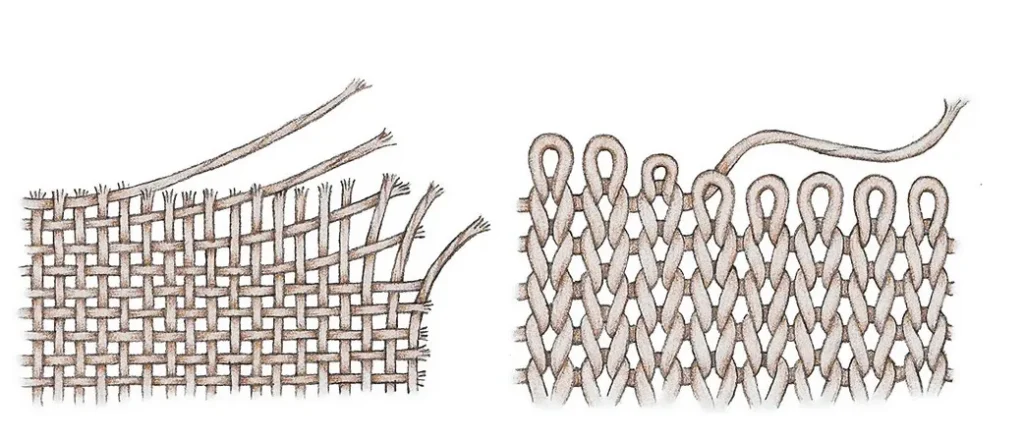
The knitting process involves taking the yarn or yarns and feeding them through knitting machines or hand needles that will create loops. Every time a loop is formed, it is put on top of the last loop, creating a continuous row of loops that adds to the fabric. If you ever see your grandma’s hand knit sweaters, you will see how the loops are much more defined by hand knitting than in a factory where this process is done much more quickly and efficiently.
As someone who worked in the textile industry for the last 12 years, I can safely say that I have seen thousands of different types of knitting fabrics from lightweight jersey to thick winter fleeces. The loop construction method is also what makes knitting fabric so unique and comfortable.
Main Types of Knitted Fabric
Weft Knitted Fabric
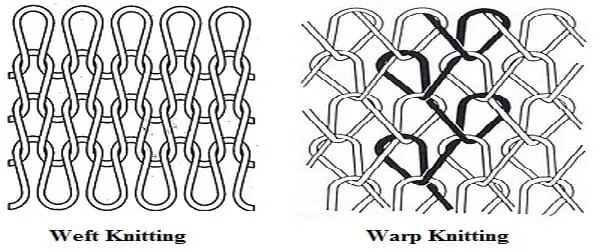
The weft knit is the type of fabric we wear most often. In this style of knitting, the horizontal rows of yarn stretch from one side of the body to the other (just like you would when you are hand-knitting).
You will find most of your wardrobe essentials (such as your favorite t-shirts, comfy sweaters, warm hoodies, and everyday socks) built from weft knitted fabric; weft knitted fabric is very stretchy in all directions (mostly horizontally) and has a soft feel when you pull it apart. A weft knitted garment will have a relaxed fit against the body and is ideal for everyday casual wear.
Warp Knitted Fabric
Warp knitted fabrics differ from weft knitted fabrics in how the yarns are oriented. The yarns in warp knitted fabrics run vertically (up and down) along the length of the fabric, resulting in a tighter and more structured product with less potential for unraveling.
You will find many examples of warp knitted fabrics in swimwear, athletic apparel (shorts, bras), and lingerie. Both warp and weft knitted fabrics are strong and stable; warp knits, however, provide additional stability due to their vertical orientation – this type of construction tends to hold its shape better than the weft knitted equivalent, which is why they are typically used to make high-performance activewear or similar garments that require maximum support during strenuous exercise activities.
Although warp knits do stretch somewhat, they do not offer the same degree of elasticity as wefts; thus, they maintain their shape better than either type of knit.
Popular Knitted Fabric Varieties
Jersey Knit
Jersey is the most popular knitted fabric you’ll ever encounter – it’s what most t-shirts are made from. This lightweight, smooth fabric has a flat surface on one side and tiny loops on the other. Your basic crew neck t-shirt, comfortable pajamas, and casual dresses are typically made from jersey knit. It’s soft, breathable, and drapes beautifully on the body.
Rib Knit
You can easily see and feel rib knit’s unique vertical ridges. It’s got an extreme amount of stretch across its body, making it perfect for the cuffing of your sweater sleeves, around the bottom of hoodies, and for necklines of t-shirts. The stretchy waistband on your sweatpants? That’s rib knit allowing for comfort by stretching, then resting gently against your body without feeling tight.

Interlock Knit
Interlock knitted fabric is a superior quality product that is smooth on both sides and does not have a “right” or “wrong” side. Interlock is heavier and thicker than jersey fabric, which makes it ideal for making high-quality polo shirts, children’s clothing, and upscale casual attire. Interlock knit is commonly used for making baby clothing because it is very soft, comfortable and does not curl at the edges like jersey fabric can do.
Fleece Knit
Fleece is the material made of knitted, fibrous materials that keep you warm during cold weather months. It consists of a soft-brushed surface which produces a layer of air to provide thermal insulation. Fleece can be found as lining in an outer coat, in sweatshirts or sweaters, as well as in comfortable blankets or even in warm loungewear or pajamas. However, fleece has the disadvantage of being very lightweight, drying relatively fast, making it less functional as a day-to-day item.
Common Uses of Knitted Fabric
Knitted fabric has become an essential material in almost every aspect of our lives. Let me show you where you’ll find it and why it’s the preferred choice for so many applications.
Everyday Clothing
Your clothing is knitted fabrics every day without even knowing it. The comfy tees you wear to work and play? They’re knitted. The lacy bras you wear that are also soft and supportive? Yep, knitted again. Your stretchy leggings that give with every step? Another example of knitted. Even casual dresses, tank-style tops, sweatpants and other comfortable clothing styles depend on this flexible knit. Why? Because knitted fabric hugs your body and moves with you.
Unlike other fabric types (a.k.a. woven) that keep you from moving comfortably, knitted fabric allows you to wear what you want without feeling as if you are wearing something restrictive.
Athletic Wear
Athletic clothing generally utilizes knitted fabric as it is particularly well-suited for sports and fitness activities. Knitted fabric allows for movement in multiple directions, while also remaining comfortable and providing a high level of durability during intense physical activity, such as running, jumping, and stretching at the gym. Many athletic clothing items, including yoga pants, moisture-wicking sports t-shirts, basketball jerseys, shorts, sports bras, and compression leggings, use knitted fabric as their primary textile due to its breathability, flexibility, and durability.
The ability of knitted material to stretch and return to its original form means your workout apparel will continue to fit well during your workouts regardless of how much you’re sweating or how hard you’re training.
Winter Clothing
Knitted fabrics keep you warm and cozy during colder climates. Your favorite thick sweater, cozy hoodie, and thermal underwear are all made from different types of knitted fabric. The looped construction of knitted fabric traps air within the fibers, providing an insulating layer to keep you warm by holding in your body heat. Knitted fabrics also provide this same function in other areas of winter apparel, such as fleece jackets, knit scarves, winter hats and warm socks.
Knitted winter apparel is made from materials that are soft and flexible, compared to woven winter materials that may be rigid or uncomfortable to wear, so knitted winter apparel allows you to layer comfortably without having to worry about bulkiness or limitations on your movement.
Home Textiles

Not only is knitted cloth used in clothing – but you will now find the use of knitted fabrics within your home decoration and furnishings. The majority of today’s modern pillows are manufactured from knitted cotton because they are softer and much more stretchy than traditional woven bed sheets. This allows knitted sheets to conform to the exact dimensions of your mattress. Many people also choose cozy throw blankets, stretchy sofa covers, and soft cushion covers as they provide a warm, inviting environment.
Many of today’s decorative pillow forms and curtains are made of knitted materials because they add depth and warmth to the home. Knitted fabrics provide flexibility, allowing you to easily cover furniture, while providing the softest texture for an inviting, comforting environment in any space.
Medical Uses
The medical field as a whole utilizes knitted fabric in numerous application fields. Knitted fabric is used in the creating of elastic bandages that wrap around injuries because it allows for a stretchy and compressive fit to the injured area. Knitted fabric is also used to create compression garments for recovery after surgery or circulation problems that require gentle, constant pressure in a similar manner.
Knitted material is used in the creation of support stockings, knee braces, thermal wraps and other therapeutic items, since knitted material can stretch to fit different body shape sizes while also maintaining the support qualities required to assist with the rehabilitation of injured body parts. Because of these, the knitted nature of knitted fabric provides a breathable fabric making it comfortable to wear for extended periods of time and can be extremely helpful for medical purposes.
Expert Insight: Industry Trends and Popular Applications
Over the years while working for textile manufacturers, I have seen some amazing new uses of knitted fabrics. The explosive growth of the activewear market over this same time has been lead to a great deal of knitted innovation. Characteristics of knitted fabrics have included: UV protection; antimicrobial properties; and temperature control. Sustainable knitted fabrics manufactured from recycled plastic bottles and organic cotton have become much more widely accepted as consumers look for more environmentally conscious materials.
Knitwear has increased in popularity due to the increase in popularity of the trend of wearing gym-type clothing for everyday usage, commonly referred to as “athleisure.” Comfort is important to consumers, and knitted fabrics provide that along with style. Knitted fabrics are also being utilized in unique and nontraditional applications such as in automobiles, outdoor patio furniture, and building structures where flexibility and durability are important.
Key Benefits of Knitted Fabric
Comfort
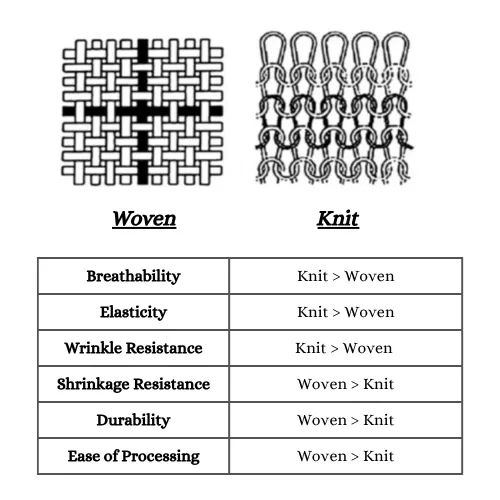
Knitted fabrics are loved for their comfort above all else. The soft, looped design of knitted textiles is much more comfortable to wear than woven fabrics, which can scratch sensitive spots on the body. Knitted textiles are also exceptionally breathable due to the air that can easily pass through the small gaps created by the loops in knitted fabrics. This means that the air will circulate and help to provide a cool, dry environment for the body.
When combined with the breathable characteristics of knitted textiles, the soft texture of the fabric makes them comfortable enough to wear for an entire day, whether you are at work, running errands, or just at home relaxing, you can stay comfortable from the time you wake up in the morning until you go to bed at night without experiencing any itching or discomfort.
Stretch and Flexibility
Knitted fabrics has a unique characteristic of being able to grow and shrink with your body. As you bend, stretch, sit, or exercise, the knitted loops are able to expand and contract naturally according to your movement. Therefore, knitted clothing does not restrict the movement of the body in the same way as more rigid fabrics; you will have the ability to move comfortably and freely during your daily activities.
In addition to its flexibility, knitted fabric has a very high degree of elasticity, meaning that once it has been stretched out, it will return to its original shape after washing. Your favourite t-shirt will no longer be loose and baggy after wearing it; it will return to its proper fit with each washing.
Durability
Knit (knitted) fabric appears very soft and delicate, but if taken care of properly it can last for many years. High-quality knitted garments are able to withstand many years of wear and still look great. Knit fabric does not easily crease or wrinkle; in fact, you can take your knit shirt out of the dryer, put it on and wear it immediately without needing to press or iron it.
Unlike woven fabrics which tend to crease easily, knit fabrics do not lose their smoothness during the course of the day and do not need to be pressed or ironed on a regular basis.
Additionally, knit fabrics hold their shape much better over time compared to many other materials; therefore, when you wear your knitted sweater multiple times, it will not develop areas that have been stretched out permanently or sagged (like many other materials).
Easy Care
Knitting has become a very popular choice for busy people who do not have the time to do extensive laundry and are looking for clothing that is easy to maintain. Knitted garments are typically washer-friendly, which makes it easy to wash them as needed, without the hassle of having to wash them by hand or take them to a costly dry cleaner. They also dry faster than heavier woven textiles due to the lightweight nature of most knitted fabrics, which allows you to spend less time laundering and drying your clothing, thereby reducing the amount of time you spend cleaning.
Most knitted garments require no additional care (i.e. special treatment) beyond a simple wash, followed by a normal dryer cycle, and the easy-to-clean aspect of knitted garments is why knitted fabric is a great option for things like everyday wear, children’s clothing, or for those who simply don’t want to spend too much time laundering.
Versatility
Knitted fabric works beautifully for all seasons, making it incredibly versatile. Lightweight knits keep you cool in summer, while thicker knitted materials provide warmth in winter. You can layer knitted pieces easily for changing weather conditions. This fabric is suitable for all ages – from soft baby onesies to comfortable clothing for seniors, everyone benefits from knitted materials.
The design possibilities are endless, with knitted fabric available in countless styles, colors, patterns, and weights. Whether you need formal wear, casual clothing, athletic gear, or sleepwear, there’s a knitted fabric perfect for your needs.
Cost-Effective
The manufacturing process for knitted materials is efficient and affordable, which means lower prices for consumers without sacrificing quality. You can find high-quality knitted clothing at reasonable prices in almost any store. The combination of durability and affordability makes knitted fabric a smart investment – these garments last for years while costing less upfront than many alternatives.
Because knitted fabric is so popular and widely produced, it’s available everywhere, from budget-friendly retailers to high-end boutiques, ensuring everyone can access comfortable, quality clothing regardless of their budget.
How to Care for Knitted Fabric
You can extend the life and quality of knitted pajama pants by taking care of them properly. To keep them looking new, and feeling soft and comfortable, machine washing using the lowest temperature setting on your washing machine, as well as lever washing using a gentle detergent will prevent damage to the delicate knit structure caused by heat shrinkage.
In addition, placing on a clean towel instead of hanging will avoid stretching out of shape and if you must use the dryer, the lowest heat setting should be used. When removing your wet knitted garments from the washing machine, it is important not to wring them out; however, you should still carefully squeeze as much excess water as possible from your clothing.
Instead of hanging knitted items, which can make shoulder bumps or cause stretching, fold them for storage instead. Avoid placing them where they will be exposed to direct sun and keep them in cool, dry areas.
Choosing the Right Knitted Fabric
Selecting the perfect knitted fabric depends on your specific needs and circumstances. For different weather conditions, choose lightweight cotton or linen knits for hot summer days, medium-weight jersey for spring and fall, and thick fleece or wool knits for cold winter months. The fabric’s weight directly affects how warm or cool you’ll feel.
For different activities, match the fabric to your lifestyle: dense, moisture-wicking knits work best for sports and exercise, soft jersey is ideal for casual everyday wear, and fine-gauge interlock or merino wool knits suit formal or business-casual occasions. If you have sensitive skin, look for 100% cotton or bamboo knitted fabric without synthetic blends, as natural fibers are gentler and less likely to cause irritation or allergic reactions.
Conclusion
Knitted fabrics are changing how we dress and how we live, with more warmth, more movement, and more options than any other type of fabric available. From T-shirts to performance sportswear, they’ve put all three features together into one material: soft, durable, and easy to care for. You can make informed decisions about your knitted garments by understanding their types, their benefits, and the correct methods of their care so that you can maximize the longevity of your favourite pieces.
Knitted fabrics can provide comfort and value in all seasons, from breathable summer apparel to warm clothing for winter.
If you want to find premium quality knitted fabric, go to Texoraglobal, where you will find a wide variety of different kinds of high-quality knitted fabrics for your clothing and different types of textiles. You’ll be able to see what high-quality material can do for you!