
Table of Contents
Introduction
When you put on your favorite t-shirt or cozy sweater, have you ever wondered how it’s made? The secret lies in the sophisticated machinery used by knitted fabric manufacturers. Whether you’re a business owner looking to source fabrics or simply curious about the process, understanding these machines can help you make smarter decisions.
In this guide, I’ll walk you through the essential equipment that knitted fabric manufacturers use to create the fabrics we love. You’ll learn what each machine does, why it matters, and how to choose the right manufacturer based on their machinery.
Understanding Knitted Fabrics Basics
What Knitted Fabric Manufacturers Actually Do
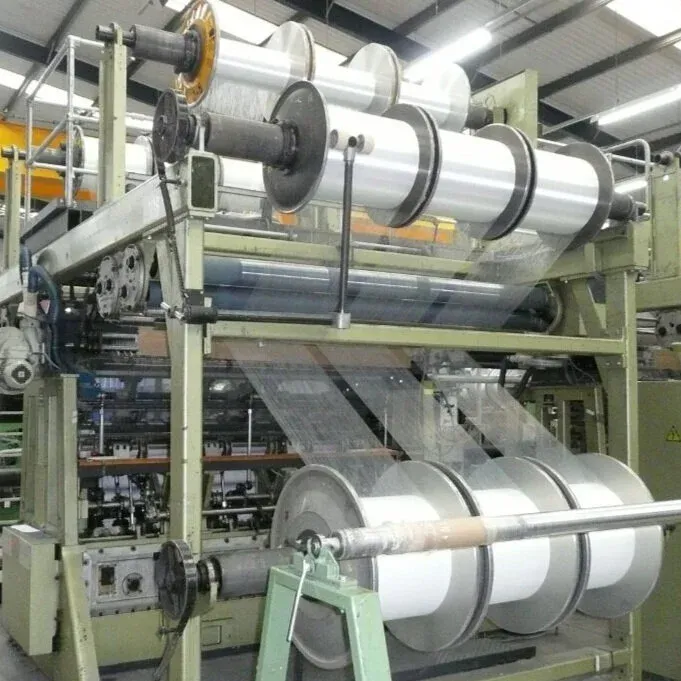
Knitted fabric manufacturers create fabrics by interlocking loops of yarn together similar to how your grandmother might knit a scarf, but on an industrial scale. This is different from woven fabrics, where threads cross over and under each other like a basket.
The beauty of knitted fabrics is their natural stretch and comfort. Think about your favorite yoga pants or that soft t-shirt you never want to take off. That comfort comes from the knitting process and the machines that create it.
Different fabrics need different approaches. A stretchy athletic shirt requires different machinery than a heavy winter sweater. Professional knitted fabric manufacturers invest in various machines to meet these diverse needs.
Why Machinery Matters in Fabric Quality
not all knitted fabric manufacturers are created equal, and their machinery makes all the difference.
Modern, well-maintained machines produce fabrics with consistent quality. They create even stitches, maintain proper tension, and minimize defects. Old or poorly maintained equipment can result in uneven fabrics, weak spots, or inconsistent colors.
When you’re choosing knitted fabric manufacturers, their machinery directly impacts your final product’s softness, durability, and appearance. A manufacturer with outdated equipment might offer lower prices, but you could end up with fabrics that pill, stretch out, or fade quickly.
Main Types of Knitting Machines
Circular Knitting Machines
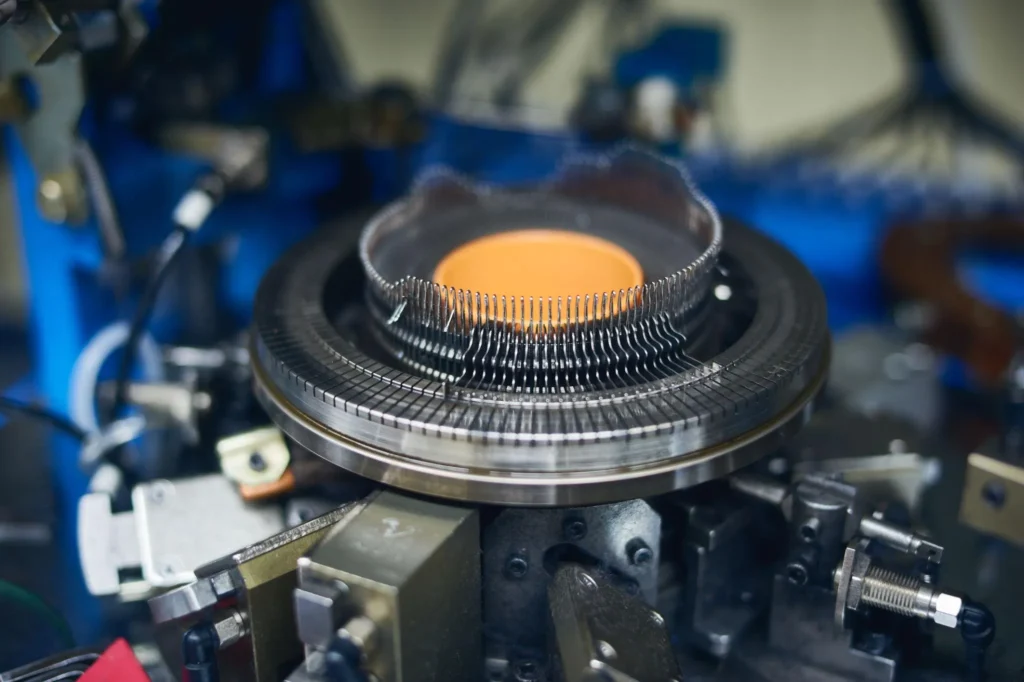
Imagine a large cylinder with needles arranged in a circle, spinning continuously to create a tube of fabric. That’s essentially what a circular knitting machine does.
These machines are the workhorses of knitted fabric manufacturers. They run 24/7 in many factories, producing thousands of yards of fabric daily. The fabric comes out as a continuous tube, which can be cut open or used as-is for items like t-shirts and socks.
What they make: Most of your everyday clothing comes from circular knitting machines t-shirts, underwear, leggings, sportswear, and hoodies. If it’s stretchy and comfortable, it probably started on a circular knitting machine.
Why manufacturers love them: These machines are incredibly efficient for large orders. Once set up, they can produce consistent fabric quickly and economically. This is why knitted fabric manufacturers who focus on mass production often have multiple circular knitting machines running simultaneously.
Flat Knitting Machines
Flat knitting machines work back and forth, like a typewriter carriage, creating flat pieces of fabric. Unlike circular machines, they can easily change patterns and create shaped pieces.
These machines give knitted fabric manufacturers more flexibility. They can create intricate designs, vary the fabric width, and even knit complete garment panels that need minimal sewing.
- What they make: Sweaters, cardigans, scarves, and fashion knitwear often come from flat knitting machines. If you’ve seen a sweater with complex patterns or color changes, it likely came from a flat knitting machine.
- The flexibility advantage: While slower than circular machines, flat knitting machines excel at customization. For knitted fabric manufacturers working with fashion brands or small batches, these machines are invaluable.
Warp Knitting Machines
Warp knitting is a bit different. Instead of one yarn creating loops, many yarns work together simultaneously, creating fabrics that are stronger and less stretchy than other knitted fabrics.
Most knitted fabric manufacturers who specialize in technical fabrics or lingerie use warp knitting machines. These machines produce fabrics with unique properties that circular and flat machines can’t achieve.
- What they make: Mesh fabrics, lace, swimwear, lingerie, and sports mesh all come from warp knitting machines. These fabrics need to be strong while remaining lightweight and breathable.
- Special applications: If you need fabrics that won’t run or ladder (like pantyhose), or fabrics with special stability, look for knitted fabric manufacturers with warp knitting equipment.
Supporting Machinery in Production
Creating knitted fabric isn’t just about knitting machines. Professional knitted fabric manufacturers use various supporting equipment to ensure quality at every stage.
Preparation Machines
Before any knitting begins, yarn must be prepared. Yarn winding machines take yarn from large cones and wind it onto smaller packages suitable for knitting machines. This might sound simple, but proper tension and winding patterns prevent problems during knitting.
Yarn conditioning equipment controls humidity and temperature. Dry yarn can break during knitting, while overly moist yarn causes tension issues. Experienced knitted fabric manufacturers know that proper yarn preparation prevents 80% of quality problems.
Finishing Machines
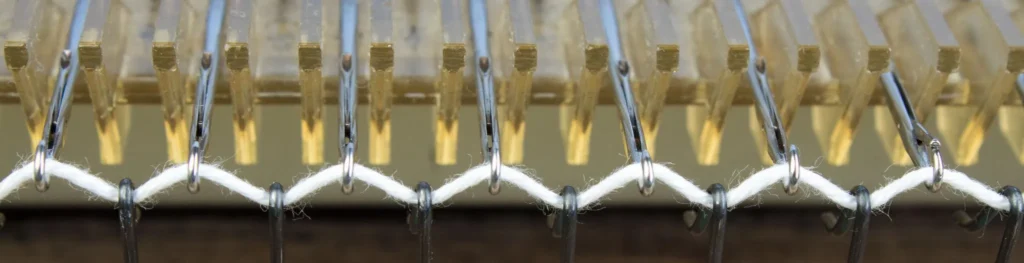
Raw knitted fabric straight from the machine looks nothing like the finished product you buy. Finishing makes all the difference.
- Dyeing machines add color to fabrics. Modern dyeing equipment used by quality knitted fabric manufacturers ensures even color distribution and colorfastness. The difference between good and bad dyeing equipment is whether your red shirt turns pink after three washes.
- Washing and drying equipment removes oils and impurities while setting the fabric’s final texture. Proper washing also pre-shrinks fabrics, so your clothes maintain their size after purchase.
- Compacting machines are secret heroes. They mechanically pre-shrink fabrics, ensuring that your t-shirt doesn’t shrink two sizes after the first wash. Reputable knitted fabric manufacturers always compact their fabrics.
- Raising and shearing machines create soft, brushed textures. Think of the inside of a cozy sweatshirt—that soft, fuzzy feeling comes from raising machines that lift tiny fibers to the surface.
Inspection and Quality Control Equipment
Top-tier knitted fabric manufacturers invest heavily in inspection equipment. Modern fabric inspection machines slowly pass fabric under bright lights while cameras and sensors detect defects invisible to the human eye.
Testing equipment checks everything from fabric strength to color fastness. Before shipping, professional manufacturers test fabric samples for stretch recovery, pilling resistance, and dimensional stability.
This equipment separates amateur operations from professional knitted fabric manufacturers. Anyone can knit fabric, but ensuring consistent quality requires serious investment in testing and inspection.
Advanced Technology in Modern Factories
Computerized Knitting Systems
Modern knitted fabric manufacturers increasingly use computerized knitting machines. These systems control every aspect of the knitting process digitally.
Computerization means you can create incredibly complex patterns with perfect repeatability. A pattern created today will look identical when produced six months from now. This consistency is crucial for brands maintaining quality standards.
Leading knitted fabric manufacturers use computer systems to monitor production in real-time, catching problems immediately rather than discovering them hours later with thousands of yards of defective fabric.
Quality Monitoring Systems
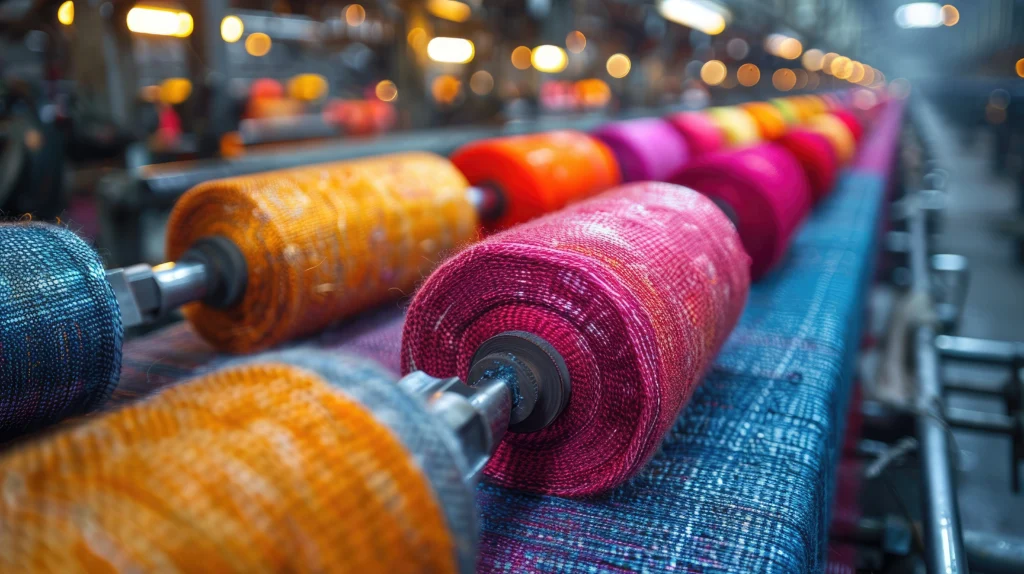
Imagine cameras continuously watching fabric production, instantly detecting defects smaller than a pinhead. That’s what modern quality monitoring systems do.
These systems save time and money while ensuring better quality. When choosing between knitted fabric manufacturers, ask about their quality monitoring technology. It’s a strong indicator of their commitment to excellence.
Red Flags vs Green Flags
Red flags when visiting knitted fabric manufacturers:
- Visibly rusty or damaged machines
- Excessive noise indicating poor maintenance
- Lack of climate control (humidity matters!)
- No visible quality inspection process
- Reluctance to show you the production floor
Green flags indicating quality knitted fabric manufacturers:
- Clean, organized facilities
- Regular maintenance schedules posted
- Investment in modern inspection equipment
- Staff who understand the machinery
- Willingness to explain their processes
Matching Machinery to Your Fabric Needs
Different projects need different capabilities. Small fashion brands need knitted fabric manufacturers with flat knitting machines and small-batch capabilities. Large activewear brands need manufacturers with multiple circular machines for volume production.
If you need custom fabrics with special properties, look for knitted fabric manufacturers with diverse machinery and strong technical capabilities. If you need basic fabrics in large quantities, prioritize manufacturers with efficient circular knitting and finishing equipment.
Conclusion
Understanding the machinery used by knitted fabric manufacturers is crucial for making smart sourcing decisions. The right equipment directly impacts your fabric’s quality, durability, and consistency. From circular knitting machines producing everyday t-shirts to sophisticated finishing equipment ensuring perfect colors and textures, every machine plays a vital role.
When evaluating knitted fabric manufacturers, look beyond price quotes. Ask about their machinery, maintenance practices, and quality control systems. Visit their facilities, inspect their equipment, and request fabric samples to test quality firsthand.
Texoraglobal combines state-of-the-art knitting technology with experienced craftsmanship to deliver premium knitted fabrics that meet your exact specifications. Contact us today to discuss your fabric needs and discover how our advanced machinery can bring your vision to life.